Loan to Value Explained: What LTV Means for Your Mortgage
By Rhys Hedges · Published 26 November 2026 · Last updated

Loan to value (LTV) is the percentage of a property’s value that you borrow as a mortgage. Borrow £200,000 against a £250,000 home and your LTV is 80%, with the other 20% coming from your deposit or equity. Lenders use it to price and approve almost every mortgage, so knowing your figure before you make an offer helps you judge what you can realistically afford, and Offer Smart’s data on recent sold prices on the same road gives you a firmer value to test it against.
Key points
- LTV = mortgage amount ÷ property value × 100. A bigger deposit means a lower LTV.
- Lenders price deals in bands, often in steps of 5% or 10%, and lower bands generally come with lower rates.
- On a purchase, the lender uses the lower of the price you pay and its own valuation, so a down valuation can push your LTV up.
- Your LTV falls as you repay the loan and can move with house prices, which matters when you remortgage.
- Buy-to-let lenders usually ask for a larger deposit than residential lenders, commonly 25%.
Table of Contents
- What does loan to value mean on a UK mortgage?
- How do you calculate LTV?
- How does your deposit set your LTV?
- Why does LTV change the interest rate you pay?
- Does your LTV change after you buy?
- What LTV do buy-to-let landlords need?
- How can you lower your LTV?
- What does our experience say about LTV?
- Want to check the value before you offer?
- FAQ
- Sources
What does loan to value mean on a UK mortgage?
LTV compares what you owe with what the property is worth. Experian’s guide gives the standard example: £200,000 borrowed on a £250,000 home is 80% LTV, which means a 20% deposit of £50,000.
The other half of the picture is equity. Equity is the part of the property you own outright: its value minus what you still owe. A low LTV means high equity, and lenders treat that as lower risk.
Lenders sort their products into LTV bands. Lloyds Bank explains that these bands often move in 5% steps, and that its highest LTV is 98% on its £5,000 deposit mortgage. For shared ownership, the LTV is based on the share you buy, not the full value of the home.
How do you calculate LTV?
The formula is short:
(mortgage amount ÷ property value) × 100 = LTV
Two worked examples from UK lenders show it in practice. Lloyds uses a £250,000 house with a £50,000 deposit: a £200,000 mortgage gives 80% LTV. Nationwide uses a £200,000 property with a £20,000 deposit: an £180,000 loan gives 90% LTV.
A few points catch people out:
- Fees do not count as deposit. Stamp duty, legal fees, surveys and moving costs come on top of the deposit and do not reduce your LTV.
- Added fees can raise it. If you add a product fee to the loan, you borrow more, so your LTV rises.
- Value means the lender’s value. More on that below.
If you want to test different loan sizes quickly, our free mortgage calculator shows the monthly repayment at each level.
How does your deposit set your LTV?
Your deposit decides your starting band. MoneyHelper says the cheapest interest rates are typically available with a 40% deposit, which is 60% LTV, and that a deposit should be at least 5% or 10% of the price, usually from savings.
On a £250,000 home, the deposit for each common band works out as follows:
| LTV | Deposit needed | Mortgage |
|---|---|---|
| 95% | £12,500 | £237,500 |
| 90% | £25,000 | £225,000 |
| 85% | £37,500 | £212,500 |
| 75% | £62,500 | £187,500 |
| 60% | £100,000 | £150,000 |
Why the lender’s valuation matters
When you buy, the lender bases LTV on the lower of the purchase price and its own valuation. Say you agree £250,000 but the lender’s valuer says the home is worth £240,000. The loan is measured against £240,000. To stay in the same band you need a bigger deposit or a lower price. We cover that situation in our guide to down valuations on a mortgage.
This is why checking what similar homes have actually sold for before you offer is worth the effort. An offer anchored on recent sold prices nearby is less likely to be marked down.
Why does LTV change the interest rate you pay?
It comes down to risk. The MSE and Podium remortgaging guide puts it simply: at 75% LTV, prices would need to fall 25% before a lender could not recover its loan, against only 5% at 95% LTV. Lower risk means a lower rate. MoneySavingExpert confirms that mortgage rates are based on LTV bands, so the lower your LTV, the lower your rate.
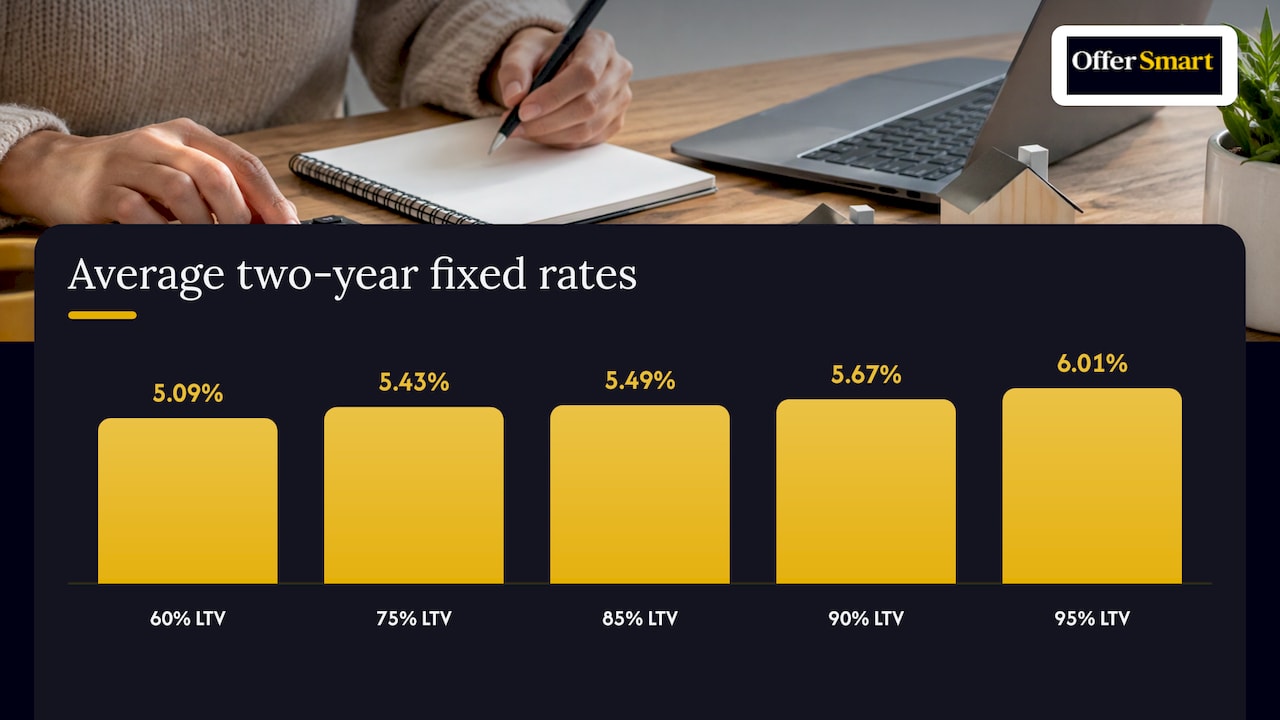
Here is what that looks like in numbers. Podium data, reported on 29 October 2026, put average two-year fixed rates at 5.09% for 60% LTV, 5.43% for 75%, 5.49% for 85%, 5.67% for 90% and 6.01% for 95%, as set out by JF Property Partners. These are averages for that week. They move with swap rates, Bank of England decisions and lender pricing, and are published again regularly by Moneyfacts and Podium, so check the live tables before you decide.
Do the cliff edges matter?
Yes. The gap between two bands can be bigger than it looks. On a £200,000 loan over 25 years, the difference between a 40% deposit and a 10% deposit in mid-October 2026 was about £40 a month, roughly £950 over a two-year deal, according to a HomeOwners Alliance comparison reported by BuyRentAuction. Fees, product length and your own circumstances change the real result, so compare total cost, not just the headline rate.
If you sit a few thousand pounds above a band boundary, it is worth working out whether a slightly lower price or a bit more deposit would move you into the cheaper band.
Does LTV affect whether you are approved?
It does. Lenders look at LTV alongside your income and spending. A higher LTV usually means tougher checks on affordability, which we explain in how lenders stress test a mortgage and how mortgage affordability is calculated. Lloyds notes that a 95% LTV mortgage makes it easier to get on the ladder, but comes with higher rates and payments. Lloyds also says the right LTV depends on your circumstances: borrow at the level you can comfortably afford.
Does your LTV change after you buy?
It does, in two ways: repayments and house prices.
On a repayment mortgage, each payment reduces the balance, so LTV falls. Take a £270,000 loan on a £300,000 home, which is 90% LTV. If the value stays the same and you have repaid £30,000 of the loan, you owe £240,000 and your LTV is 80%.
House prices work in either direction. If the same home rises in value to £320,000 and you still owe £270,000, LTV drops to about 84%. If it falls to £285,000, LTV rises to about 95%. MoneySupermarket notes that a rise in LTV when prices fall can limit your remortgage options.
On an interest-only mortgage the balance does not fall through payments, so LTV changes only with the property’s value. Our guide to interest-only versus repayment mortgages explains the trade-off.
What LTV do buy-to-let landlords need?
Buy-to-let lending sits at lower LTVs than residential. MoneyHelper says lenders could ask for at least 25% deposit or equity, which is 75% LTV. Offers at 80% to 85% LTV exist but can be hard to secure without an established portfolio. Rental income usually has to cover 125% to 145% of the mortgage repayments.
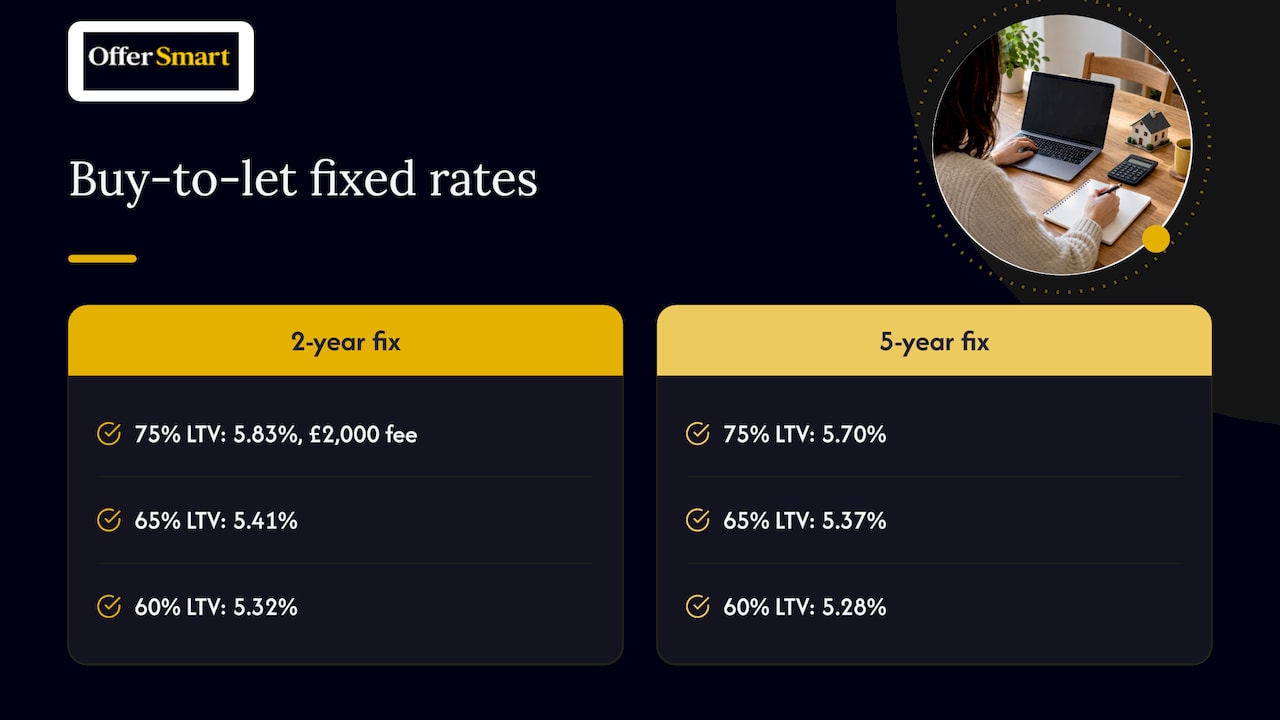
Rightmove’s buy-to-let rates page, updated on 21 November 2026 using Podium data, shows how the bands price. Average two-year fixes were 5.83% at 75% LTV (with a £2,000 fee), 5.41% at 65% and 5.32% at 60%. Five-year fixes were 5.70% at 75%, 5.37% at 65% and 5.28% at 60%. Rightmove adds that most lenders lend up to 75% of the value, with 20% deposits accepted only in exceptional cases.
So for a £200,000 buy-to-let, a 75% LTV loan is £150,000 and your deposit is £50,000, before stamp duty and legal costs. Higher-rate taxpayers often face the 145% cover test, so the rent has to be strong enough for the loan size, not just the deposit. If you are lining up the three eligibility checks that England landlords face before buying, this guide to buy-to-let purchase checks covers them alongside LTV and deposit requirements.
For investors weighing how much cash to put in, a lower LTV costs more upfront but lowers the rate and the monthly payment. Our guide to cash on cash return shows how to test the effect on your yield.
How can you lower your LTV?
There are four practical routes, depending on whether you are buying or remortgaging.
- Save a larger deposit. MoneySupermarket calls this the most reliable method, though it warns that rising house prices can outpace savings if you wait too long.
- Pay less for the property. Negotiating a lower price reduces the loan for the same deposit. Sold prices on the same street are the strongest evidence for that conversation.
- Make overpayments. A lump-sum overpayment before remortgaging can move you into a lower band. MoneySupermarket says moving from 80% to 75% can make a significant difference to the rate. Check your lender’s overpayment limits first, because early repayment charges can apply during a fixed deal.
- Support a higher valuation. The MSE and Podium guide says you can show a higher value using realistic evidence, such as recently sold comparable homes. The lender’s independent valuer still checks the figure.
The same guide gives rough equity thresholds for remortgaging: at least 5% to remortgage at all, around 20% for a good rate and 40% for the best deals. It also defines equity clearly: owing £200,000 on a £300,000 home leaves £100,000 equity, equivalent to a 33% deposit.
What does our experience say about LTV?
Most buyers treat LTV as something the lender decides. In practice, one of its two inputs is the value, and that is where evidence helps you.
The price you agree and the lender’s valuation can differ, and the gap lands on your deposit. Before offering, we think you should know what comparable homes, especially those on the same road, have recently sold for, how the area looks on flood and crime risk, and what the home will cost to run. That is why our reports bring local sales, area data and running cost estimates into one place.
Our reports are a data-led guide to what to offer. They are not a RICS valuation, a survey or financial advice, and a lender’s valuer will reach their own figure. But an offer grounded in comparable evidence gives you a better chance of staying in the LTV band you planned for.
Rhys Hedges
Want to check the value before you offer?
Our full buyer report costs £19.99 as a one-off. Enter an address or paste a Rightmove or OnTheMarket link and you get comparable sales, area data and a guide to what to offer. If you are looking at several homes, the Unlimited Homebuyer Membership is £39.99 per month.

Estate and letting agents can also use branded property and area guides to give buyers and tenants clear local information.
FAQ
What is a good LTV for a mortgage?
There is no single answer, because it depends on what you can afford and what you want to pay. Lower LTVs generally give access to lower rates and a wider choice of deals. MoneyHelper says the cheapest rates are typically at 60% LTV, but many buyers use 90% or 95% deals to get on the ladder sooner.
What is the maximum LTV in the UK?
Many mainstream mortgages go up to 95% LTV, which is a 5% deposit. Lloyds states its highest is 98% on its £5,000 deposit mortgage. A small number of 100% LTV products exist, subject to lender criteria.
Is LTV based on the price I pay or the valuation?
For a purchase, lenders use the lower of the two. If the valuer comes in under your agreed price, your LTV is calculated on the valuation, so you may need more deposit or a renegotiated price.
Does LTV matter if I am remortgaging?
Yes. Your LTV is based on your current balance and the property’s value, so it often falls after a few years of repayments or price growth. A lower band can open cheaper deals, so it is worth recalculating before your fixed rate ends.
Sources
- Experian: Loan-to-value ratio guide
- Lloyds Bank: What is loan-to-value?
- Nationwide: How mortgages work
- MoneyHelper: First-time buyer guide
- MoneySavingExpert: How much can I borrow?
- MSE and Podium: Free guide to remortgaging
- JF Property Partners: Mortgage interest rates UK
- BuyRentAuction: LTV and deposits explained
- MoneySupermarket: What is loan-to-value ratio?
- MoneyHelper: Buy-to-let mortgages explained
- Rightmove: Average buy to let mortgage rates
- Haven Mark Advisers: Buy-to-let purchase checks