New Build Premium: How Much Extra Are You Paying?
By Rhys Hedges · Published 25 November 2026 · Last updated
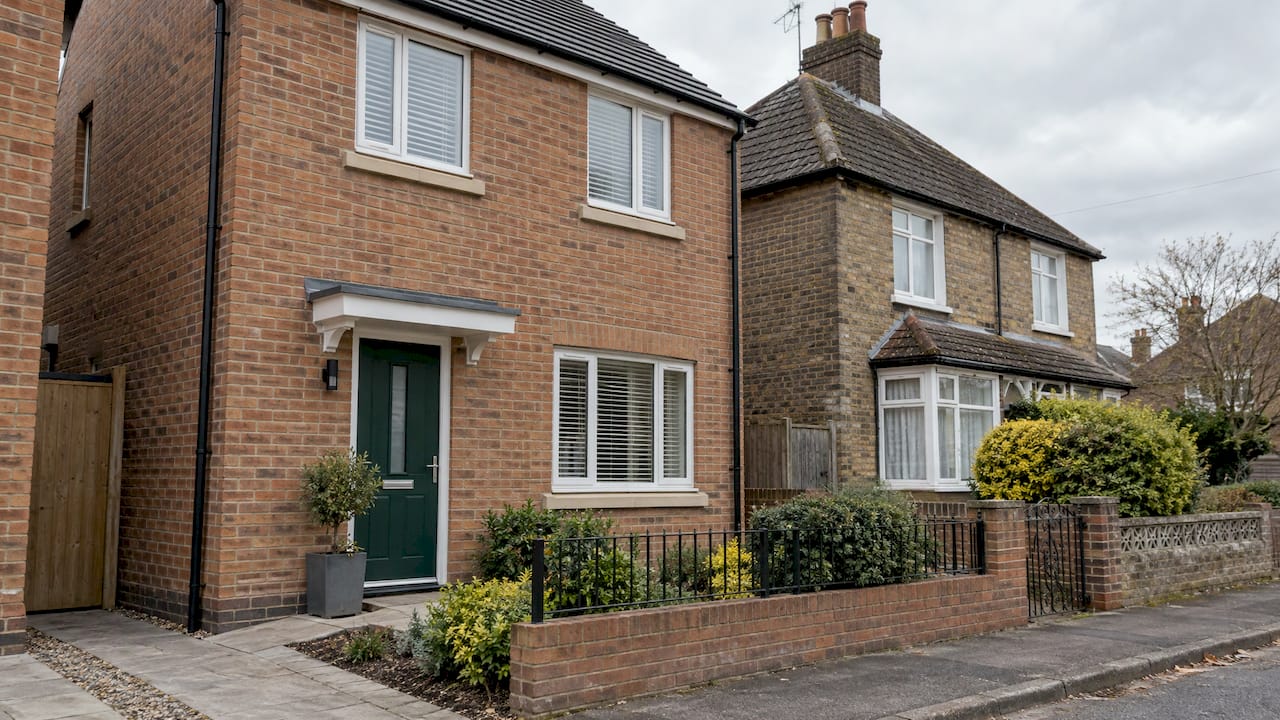
The new build premium is the extra you pay for a brand-new home compared with a similar older home in the same area. Depending on how it is measured, it runs from under 10% on like-for-like resale data to almost 30% on headline averages, and it varies a lot by area. The way to deal with it is to compare the asking price with recent sold prices of comparable homes nearby, which is what a data-led pre-offer check from Offer Smart is designed to help you do.
Key points
- The headline gap is large: the UK House Price Index put the average new build at £344,286 in July 2026, against £269,401 for existing homes, a gap of about 27.8%. That compares averages, not like-for-like homes.
- Like-for-like, analysis of Land Registry resales found buyers paid a median 8.9% more for a home new than it was worth second-hand.
- The longer you stay, the more the gap shows up on resale. Selling within three years is where it bites hardest.
- Developers prefer incentives to price cuts, so negotiate both, and always check what the neighbouring resale homes actually sold for.
- The premium is not a fixed percentage. In some areas new builds are cheaper than existing homes.
Table of Contents
- What is the new build premium, and where does it come from?
- How big is the new build premium in the UK?
- Does the premium vary by region and property type?
- Do new builds lose value after you buy?
- How can you check whether a new build asking price is fair?
- How do you negotiate a new build price?
- Is the new build premium worth paying?
- Do first-time buyers and agents need to treat the premium differently?
- What does Offer Smart add to this check?
- Our view on the new build premium
- FAQ
- Sources
What is the new build premium, and where does it come from?
The government’s How to buy a home guide describes the new build premium as the reason a new build can cost more than a similar second-hand home. It also notes why buyers accept it: new homes are clean and energy efficient, and you can often choose fixtures and fittings. Second-hand homes, by contrast, give you more scope to improve the property and add value yourself.
There are several reasons a developer charges more:
- Modern regulation. New homes must meet current construction and energy-efficiency standards. Redrow’s explanation also points to warranty and insurance costs being built into the price, plus environmental compliance requirements.
- Build costs. The same guide says some developers expected labour and material costs to rise by 21 to 40% across 2025 and 2026.
- Newness itself. Nobody has lived there, nothing needs replacing, and you move in without a project list. Buyers pay for that, and developers price it in.
- Local supply. The premium does not apply in every market or location. Where plenty of well-presented older homes are for sale, the gap shrinks.
The last point matters most for you as a buyer. The premium is set by what your particular street, estate and postcode will bear, not by a national formula.
How big is the new build premium in the UK?
It depends on which number you look at, and the two common ways of measuring it give very different answers.
The headline gap between averages
The UK House Price Index is published monthly by HM Land Registry, the ONS and other bodies, and it splits average prices by new and existing property. The September 2026 release, covering July 2026 prices, showed the average new-build price at £344,286 and existing resold property at £269,401. That is a gap of £74,885, or roughly 27.8%. These averages move with every monthly release, so treat them as a snapshot of that month.
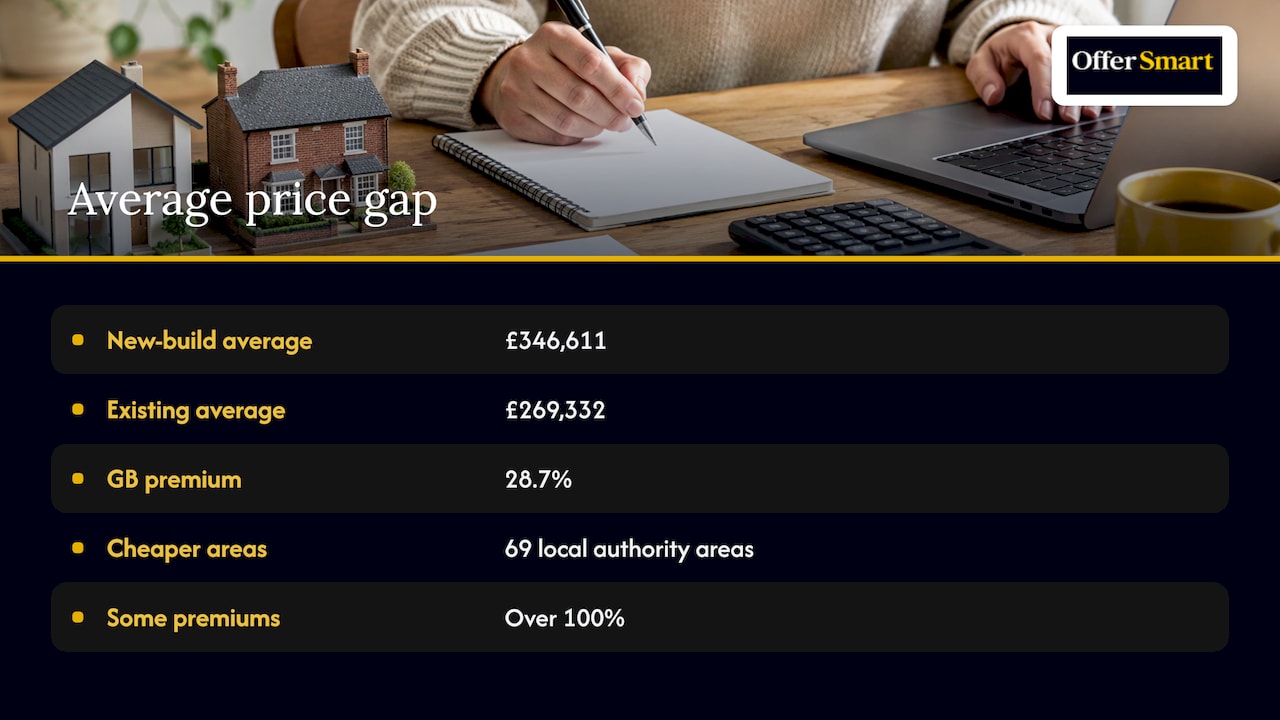
A separate analysis of the August 2026 index data, reported by Mortgage Solutions, put the Great Britain average at £346,611 for new builds against £269,332 for existing homes, a premium of 28.7%. The same report found that new builds were cheaper than existing homes in 69 local authority areas, while some other areas showed premiums above 100%.
Those averages are useful for understanding the market, but they are not a measure of what you will overpay. New builds are not the same mix of homes as the existing stock. They tend to be built in particular places and in particular sizes, and a block of new flats in one city will pull the average in a different direction from a row of old terraces somewhere else.
The like-for-like premium
A more useful measure compares a new home with a comparable second-hand home nearby. An analysis of Land Registry data to August 2026, covering 1.1 million resold new homes in England and Wales, found that buyers paid a median 8.9% more for the home new than it was worth second-hand. On a typical 2025 new home priced at £360,160, that is about £29,400.
So a sensible working assumption is a premium in single digits to low double digits for a comparable home, and a lot more or less where your local market is unusual.
Does the premium vary by region and property type?
Yes. The same analysis broke the like-for-like premium down:
| Area or property type | Premium paid for the home new |
|---|---|
| London | 10.5% (about £54,600 on a £575,000 typical new home) |
| South West | 7.4% (about £25,800 on a £375,000 typical new home) |
| Wales | 8.3% (about £23,000) |
| Detached houses | 7.5% |
| Semi-detached houses | 9.8% |
| Terraced houses | 10.0% |
| Flats and maisonettes | 9.0% |
Two practical points follow. First, a percentage looks small until you apply it to a London price. Second, if you are buying a terraced or semi-detached new build, you are typically paying a slightly higher premium than for a detached one, so the comparison with local resales deserves more attention.
Do new builds lose value after you buy?
This is the question behind most searches on the subject. The honest answer is that the premium you pay is not fully recovered if you sell soon, and the gap tends to widen the longer you hold.
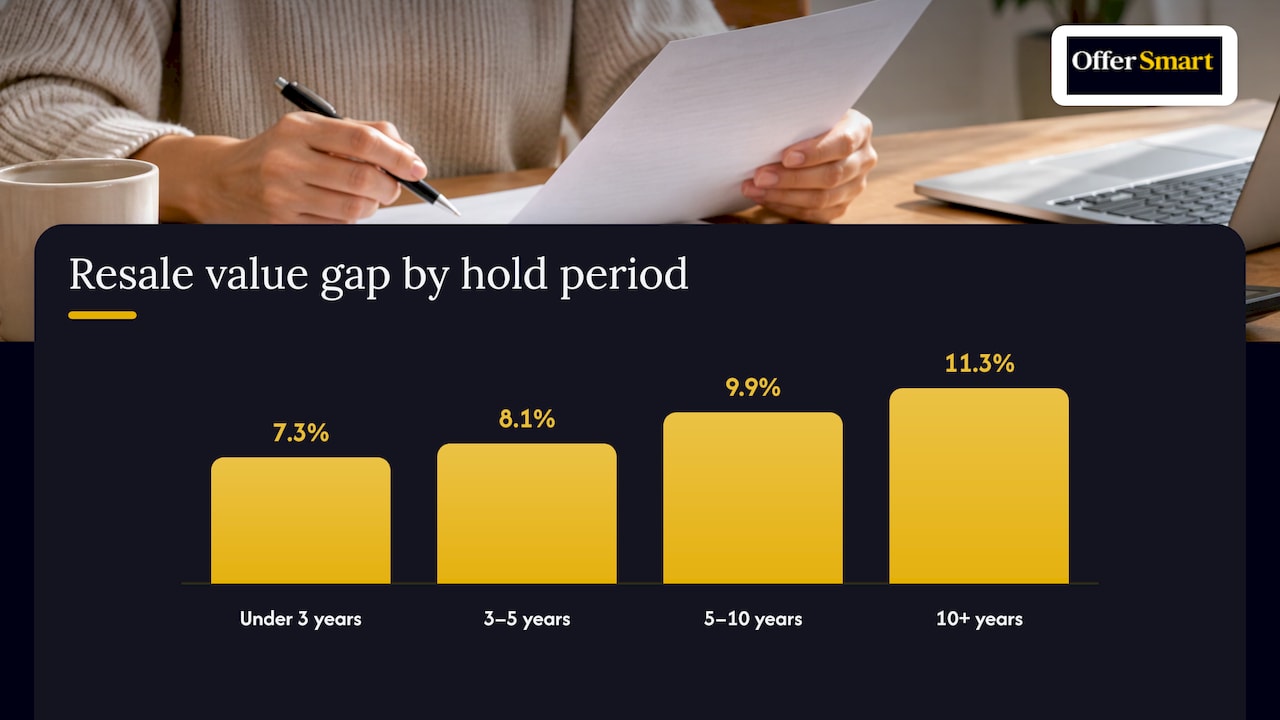
The Land Registry resale analysis found the gap between what buyers paid and what the home was worth second-hand was:
- 7.3% for homes sold within three years
- 8.1% for homes held three to five years
- 9.9% for homes held five to ten years
- 11.3% for homes held ten years or more
It also found that 12.0% of new homes resold within three years sold for less than the purchase price, compared with 6.3% of comparable second-hand homes. And 76% of new homes grew less in value than their second-hand comparisons.
What does that mean in practice?
- Plan to stay. If you expect to sell inside three years, the premium is the biggest risk to your return. If you expect to stay for the long term, you are buying the convenience, the warranty and the lower early maintenance, and you are paying for them up front.
- Value the purchase price, not the incentive. Land Registry records the price in the contract before incentives. If the developer paid your legal fees or added extras, your effective cost was lower than the registered price, and so the registered price is not a clean guide to what you really paid.
- Expect your buyer to compare you with new stock. When you resell, you compete with the next phase of the same development, and with older homes that have had time to settle into the area.
None of this makes a new build a poor choice. It means the price you agree at the start is the number that matters, because you will not get it back by waiting for the market.
How can you check whether a new build asking price is fair?
The asking price on a new build is a starting point, just as it is on any other home. The check you need is simple: find what comparable homes have actually sold for, and see where the asking price sits against them.
- Find sold prices on the same road and the nearest streets. HM Land Registry records every completed sale in England and Wales, and the price paid data is public. Our guide on how to find comparable sold prices walks through it.
- Match like with like. Compare the same property type, a similar number of bedrooms and similar floor area. A three-bedroom new build semi should be set against three-bedroom resale semis, not against flats or larger detached homes.
- Use recent sales only. A sale from several years ago tells you about a different market. Prefer the last 6 to 12 months where there are enough sales.
- Look at earlier phases of the same development. If the developer has sold earlier homes, the first resales on the estate are the best guide to what the market will pay for these homes second-hand.
- Allow for what you are getting. A home with an A or B energy rating, a warranty and no immediate work needed is worth something. An older home might need a boiler, windows or cavity wall insulation, which has its own cost, and that belongs in the comparison.
- Subtract the premium you are happy with. Take the resale evidence, add a sensible margin for newness, and compare the total with the asking price.
If the gap between the asking price and the comparable evidence is far larger than the single-digit like-for-like premium above, you have a reason to negotiate.
How do you negotiate a new build price?
The government’s buying guide says the asking price is just a starting point, that you should not be afraid to make a lower offer, and that the estate agent is legally obliged to pass on all offers. The same applies on a development, where the sales team is usually the developer’s own staff or an agent working for them.
Developers, though, behave differently from private sellers. They protect headline prices because those prices set the value of the remaining plots and what the next buyers will pay. The analysis of resale data notes that builders often offer incentives such as paying fees or adding extras instead of cutting the price. So:
- Ask for both. Open with a lower price backed by comparable evidence, then ask what incentives are available. They often have more room on one than the other.
- Put a value on each incentive. A paid legal bill or stamp duty contribution is worth a known amount. Upgraded flooring or a kitchen finish chosen from a developer range may be worth less to you than it costs the developer to list.
- Time your approach. Developers often push to hit sales targets at the end of a reporting period, and unsold plots in a late phase are easier to discuss than the first release. Ask the sales team about their schedule.
- Use the evidence. Quote the sold prices of comparable resale homes. A calm, factual offer carries more weight than a general request for a discount.
- Keep your options open. A verbal offer can be renegotiated at any point up to exchange, for example if your survey finds significant issues.
For the mechanics of the offer itself, our guides on how much below asking price to offer and how to make an offer on a house cover the order of play, and there is an email template for offering below asking price if you would rather put it in writing.
Is the new build premium worth paying?
For many buyers it is, as long as the premium is a known and moderate amount rather than a surprise. The reasons are practical:
- Energy performance. Government-backed buying guidance highlights that new homes are energy efficient, and energy performance certificate data reported by one new-homes guide suggests over 80% of new homes sit in bands A or B.
- Lower early maintenance. Fittings, roof, boiler and windows are all new, so your first years of costs are mostly predictable.
- Choice. On many developments you pick finishes before completion.
- Warranty. Most new homes come with a structural warranty, and the cost of it sits inside the price.
The premium is less likely to be worth it when:
- You may sell within three years.
- Comparable resale homes nearby sell for only slightly less and are in a better location.
- You want scope to add value through improvements, which the government guide notes is easier in a second-hand home.
- The development has many unsold identical homes, which can hold resale prices down.
If you are an investor or landlord, the same logic applies to yield. A higher purchase price lowers your rental yield unless the rent is also higher, so check the rental evidence for new stock against older stock in the same postcode rather than assuming new commands more.
Do first-time buyers and agents need to treat the premium differently?
First-time buyers are the group most exposed to a premium they do not notice, because they have no previous sale to compare against. Help to Buy buyers saw this clearly: the official evaluation of the scheme found buyers paid a new build premium over equivalent second-hand homes and about 1% more again for a Help to Buy home than a similar new build outside the scheme. The lesson is the same whatever scheme or incentive you use: check the price on its own merits.
Estate agents selling resale homes next to new developments can use the same evidence. Buyers weighing a new build against your listing will want to see the like-for-like comparison, the running costs and the area details. Presenting those clearly helps them see the value in a well-located resale home.
What does Offer Smart add to this check?
A pre-offer report from Offer Smart pulls recent local sales, including homes on the same road, into one place alongside crime and flood risk, schools, estimated running costs and a mortgage calculator, so you can see where a new build asking price sits before you make an offer. You enter an address or paste a Rightmove or OnTheMarket link. It is a data-led guide to what to offer, not a RICS valuation, a survey or financial advice.
The full buyer report costs £19.99 as a one-off. If you are comparing several developments and resale homes, the Unlimited Homebuyer Membership is £39.99 per month. You can see what a report looks like in the example buyer report.

For a first look at how the report supports an offer, the pre-offer report page explains what it covers.
Our view on the new build premium
We think the premium is best understood as a price you can examine, not a fixed cost you have to accept. Headline averages of nearly 28% make good headlines, but they compare different mixes of homes. The figure that matters to you is the gap between one particular new home and the homes around it that have actually sold.
Our tool is built around that comparison. You enter an address or paste a listing link, and we show recent local sales, including the same road, alongside area and running cost data. The aim is to give you the comparable evidence and negotiation leverage to make a calmer, better-informed offer, and to avoid overpaying.
We would also encourage every buyer to think about how long they expect to stay. The resale data shows the gap widening with time, so a buyer planning a short stay has the most to gain from a firm, evidence-based price at the start.
Rhys Hedges
FAQ
Is a 10% new build premium normal?
It is in line with the like-for-like data. Analysis of Land Registry resales found a median premium of 8.9% across England and Wales, with London at 10.5%. A figure far above that for a home near comparable resales is worth questioning.
Do new builds always cost more than older homes?
No. Mortgage Solutions reported that new builds were cheaper than existing homes in 69 local authority areas in the August 2026 data. The premium depends on your local market and the type of home.
Can you negotiate the price of a new build?
Yes. You can make a lower offer, and the agent must pass it on. Developers often prefer to offer incentives such as paying fees or adding extras, so ask about those alongside the price, and use recent sold prices of comparable homes to support what you propose.
How long should I stay in a new build to avoid losing money?
There is no guaranteed point. The resale data shows the gap between the purchase price and second-hand value was 7.3% for homes sold within three years and 11.3% for those held ten years or more, and 12.0% of homes resold within three years sold for less than the purchase price. Buying at a price supported by local evidence gives you the best protection.
Sources
- UK House Price Index summary, September 2026 (GOV.UK)
- New-builds cheaper in 69 areas as premiums top 100% elsewhere (Mortgage Solutions)
- Analysis of new-build premium and resale values using HM Land Registry data
- How to buy a home (GOV.UK)
- Evaluation of the Help to Buy scheme (GOV.UK)
- What is the new build premium? (Redrow)
- Cavity wall insulation cost and grants (Proofterior)